Saudi Property Locations Explained for Foreign Investors
For years, owning property in Saudi Arabia as a foreigner meant working around the rules rather than with them. That changed in January 2026. The Kingdom introduced the Law of Real Estate Ownership by Non-Saudis, which lets foreign individuals and companies buy and hold property in approved parts of the country. It replaced a much older framework and sent a clear signal that Saudi Arabia wants international money in its property market, not just in its oil and tourism.
The catch is geography. You cannot simply buy anywhere. The law works on a designated-zone model. The Council of Ministers, working with the Real Estate General Authority, decides which districts and cities are open to foreign buyers and on what terms. Get the location right and the process is straightforward. Get it wrong and you may be looking at a property you cannot register in your own name.
So location is no longer just about price, yield or lifestyle. It decides whether you can own at all. Here is how the main places on the map actually work for a foreign investor.
Riyadh
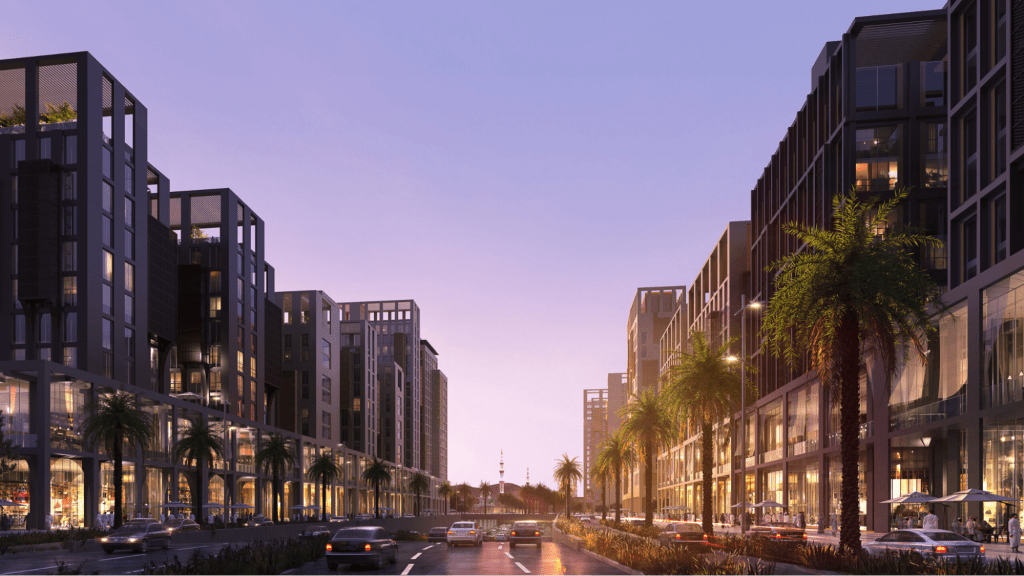
Riyadh is where most of the foreign attention is going, and for good reason. It is the capital, the seat of government, and increasingly the place multinationals must base their regional headquarters if they want to keep winning government work. That single policy has pulled thousands of senior expatriate families into the city, and they all need somewhere to live. For a foreign buyer, Riyadh is open on a zoned basis rather than across the whole city. The districts that come up most often sit in the north: Al Malqa, Al Nakheel, Al Yasmin and Al Olaya. These are the areas with newer stock, business parks, and the kind of amenities international tenants expect. The King Abdullah Financial District and the expanding metro network have made the north even more attractive, because tenants can actually get around. Riyadh is also hosting World Expo 2030, and large parts of the city are being rebuilt around that deadline. For an investor with a medium to long horizon, that pipeline of infrastructure is the real story.
Jeddah
Jeddah has a different personality. It is the Kingdom's main Red Sea port, the historic gateway for pilgrims heading to Makkah and Madinah, and a more relaxed, cosmopolitan city than the capital. Like Riyadh, Jeddah is open to foreign buyers within specific districts rather than everywhere. The names that surface most are along or near the coast: Al Shati on the Corniche, Al Hamra, Al Rawdah and North Obhur. The waterfront districts carry a premium, and North Obhur in particular has long been popular with families who want beach access and newer villas. What makes Jeddah interesting for a certain kind of investor is its role as the entry point to the two holy cities. Millions of pilgrims pass through every year, and that traffic supports both short-stay rental demand and a steady long-term population. If your thinking is tied to the pilgrim economy, Jeddah gives you exposure without the ownership restrictions that apply inside Makkah and Madinah themselves.
The Eastern Province
The Eastern Province is the part of Saudi Arabia that foreign investors often overlook, and that can be a mistake. This is the Kingdom's oil heartland, home to Saudi Aramco, and the Dammam metropolitan area, which folds in Dhahran and Khobar, is one of the three most active property markets in the country alongside Riyadh and Jeddah. The appeal here is less about glamour and more about fundamentals. The province has a large, stable population of well-paid energy-sector workers, both Saudi and expatriate, and that underpins steady rental demand. It sits right across the causeway from Bahrain, so there is real cross-border movement of people and money. For an investor, the Eastern Province tends to offer better value per square metre than prime Riyadh or waterfront Jeddah, and the tenant base is dependable rather than speculative. Because the zone maps here are still settling, this is an area where checking the current REGA designation matters even more than usual.
Makkah
Makkah sits in a category of its own. As the holiest city in Islam, it has always been treated with extra care in Saudi law, and the new framework keeps that protection firmly in place. Foreign ownership here is not open in the way it is in Riyadh or Jeddah. What has changed is still meaningful. Under the 2026 rules, Muslim foreign individuals can hold ownership rights in Makkah within specific, tightly regulated zones, and so can certain Saudi-incorporated companies that have foreign shareholders. For decades the practical route for a foreign Muslim was a long usufruct lease, often running to ninety-nine years, rather than true ownership. The move toward freehold title in approved areas is a real opening for Muslim buyers around the world. This is a market driven almost entirely by faith and the pilgrim economy rather than ordinary residential demand. Properties close to the Haram command extraordinary prices, and rental dynamics are shaped by Hajj and Umrah seasons rather than standard twelve-month tenancies. Eligibility is the first question, not the last.
Madinah
Madinah follows the same logic as Makkah and rewards the same caution. It is the second holiest city in Islam, home to the Prophet's Mosque, and ownership by foreigners is limited to Muslim individuals and specific corporate structures under conditions set by the authorities. The encouraging part for eligible buyers is that Madinah has clearly defined approved zones. The Knowledge Economic City, a large listed developer operating inside the city's urban area, is one of the named zones where non-Saudi ownership is permitted. Several of these developments sit within a short drive of the Prophet's Mosque and the Haramain high-speed rail station that links the two holy cities. The result is a market where you can find contemporary apartments and serviced units aimed at both residents and visitors. Before committing to any specific building, confirm two things: that you personally qualify to own in Madinah, and that the project sits inside one of the approved zones on REGA's map.
NEOM and the Red Sea economic zones
Away from the established cities, Saudi Arabia is building a set of entirely new destinations, and these come with their own rulebook. NEOM in the northwest and the Red Sea Global resorts along the coast sit inside Special Economic Zones, which were designed from the ground up to welcome foreign capital. Ownership in these zones tends to be easier rather than harder, with streamlined transfers and fewer of the bureaucratic steps you might meet on the mainland. Buying into a Red Sea resort property or one of the NEOM developments feels closer to investing in a purpose-built international destination than working through a traditional local market. The trade-off is that these are long-horizon, partly speculative plays. Much of what is being sold is still under construction, and the eventual demand depends on tourism numbers that have not fully arrived yet. For the right investor with patience and an appetite for a development story, the economic zones are some of the most interesting opportunities in the Kingdom. For someone who needs income from day one, the established cities are usually the better fit.
Goal alignment is everything
A few rules sit on top of all of this, whatever city you choose. Foreign residents of Saudi Arabia can own one residential property for their own use outside the designated zones, though that exception does not extend to Makkah and Madinah. Commercial, industrial and agricultural property is open to foreign buyers across the whole country, not only in the residential zones. There is a transaction cost specific to foreign buyers, reported at around five percent of the property value, which is worth building into your budget from the start. And the designated-zone maps are live documents. Areas that are open today may expand, and areas that look promising may not yet be formally approved. The practical lesson is simple: verify the zone status of any specific plot or building before you commit any funds.
Before you decide
At Waasiya, we work with buyers who want exposure to the Saudi market in a way that stays aligned with their principles. That usually means interest-free developer payment plans and clean, escrow-backed transactions rather than conventional finance. We help you match the right location to your goals, confirm that you are eligible to own where you want to buy, and move through the contract and registration without surprises. If you are weighing up Saudi Arabia, the best first step is a straightforward conversation about what you want to achieve and where you stand on eligibility.
Book a free consultationFrequently asked questions
Saudi Arabia is genuinely open to foreign property investment now. The same budget can make you a freehold owner in northern Riyadh, a restricted but eligible buyer near the Prophet's Mosque, or the holder of a property you cannot register at all, depending entirely on the district and your own eligibility. Getting those two variables right before you fall for a particular building is the most useful thing you can do.